The Lacquer Palace
The
Pandavas had been invited to stay in The Lac Palace, but expecting an evil
plot, Vidura, half-brother of Pandu, father of the Pandavas, warned Prince Yudhishthira
of what was to come.
"I fear you are in great danger," he said. "Make sure to move with caution as you proceed."
Prince Yudhishthira thanked Vidura and went on his way, worried about what was to come.
"I fear you are in great danger," he said. "Make sure to move with caution as you proceed."
Prince Yudhishthira thanked Vidura and went on his way, worried about what was to come.
When the
Pandavas and Queen Kunti reached the palace, they marveled at the beauty of
it, but Prince Yudhishthira saw that all the great tapestries and beautiful
ornate rugs and furniture with wondrous scrollwork were all soaked heavily in
something thick and black which reeked of strong alcohol and oil and thus he grew fearful. He warned his brothers and mother, Queen Kunti
of what was happening around them and they too feared for their lives but no one knew how to escape for the palace was being watched and guarded.
Now Prince
Vidura still worried about the Pandavas and he had sent a worker of his to infiltrate
the stores of oil and alcohol which were to have been used to soak the furniture and walls
of the palace and to replace them with a watery tar that could easily be mistaken
for oil but would neutralize the flammable liquids already in place. But the worker had made a mistake and instead of replacing the oil and alcohol with tar, he replaced it with a strong brown liquor that was foul to smell. The
barrels of liquor had been a gift from a country far away called Ireland but
all those who tried it had deemed it unpleasant to taste and instead many
people had begun to use it for fuel for it burned quite well. It was also used as glue as it became thick like molasses if left to sit in the sun and it was completely inedible to all human beings except for those who made it.
When the
worker returned to Vidura and saw that the barrels of tar with which he was to
replace the oil and alcohol were still there, he panicked and realized what he had just
done. Vidura, immediately scolded the worker and sent him to save the Pandavas
in another way. The worker dressed up as a woman and tried to seduce the leader of the guards, Purochana and his men who were watching the palace and waiting for a chance to burn it
down, but he could not sway them and thus he was forced to try to come up with
other methods in order to save the Pandavas. He
was unable to come up with a bribe large enough to sway them as well and thus he
grew desperate. He finally started digging and digging and digging, trying
desperately to dig a tunnel into the palace. But he did not know where he was
going when he was underground and he dug for many days, praying that the
palace would not burn before he got there, but through a stroke of luck, he managed
to reach the palace and accidentally knock free a group of tiles in the center
of the palace where Prince Yudhishthira was sitting.
That very
night, the Pandavas snuck out through the tunnel that the worker had built and
they went safely into the forest. As they fled, the palace was lit ablaze by the guards that had been watching it and
it burned to the ground taking with it a beggar woman and her children who had slept there for the night. The air reeked of molasses as the thick tar-like alcohol burned the building down. When
the fires ceased and the bodies were found, it was assumed that these were the
bodies of the Pandavas and they were able to slip safely into the forests where they would stay for some time.
Author's note: I think I've done an okay job of making this piece more comic. I just decided to leave the comedy light in this one. The main change obviously is that the worker becomes the main protagonist of the story and through his blundering failures, only barely manages to accidentally save the Pandavas and Queen Kunti. I wanted to take on this story from a less historical-style point and also add some humor to it. Though it isn't an extremely comical piece still, it still has some comic elements which I think are the highlight of it. When I went back to edit this, I didn't end up making a ton of changes and I'm still not happy with this one. Well I just don't think I'm ever going to be particularly happy with this one. I could never really decide where to take it so I left the strange disconnected form as it is. It's not great but I just want to be done with it to move on to other pieces now.
Bibliography: Public Domain Mahabharata, link
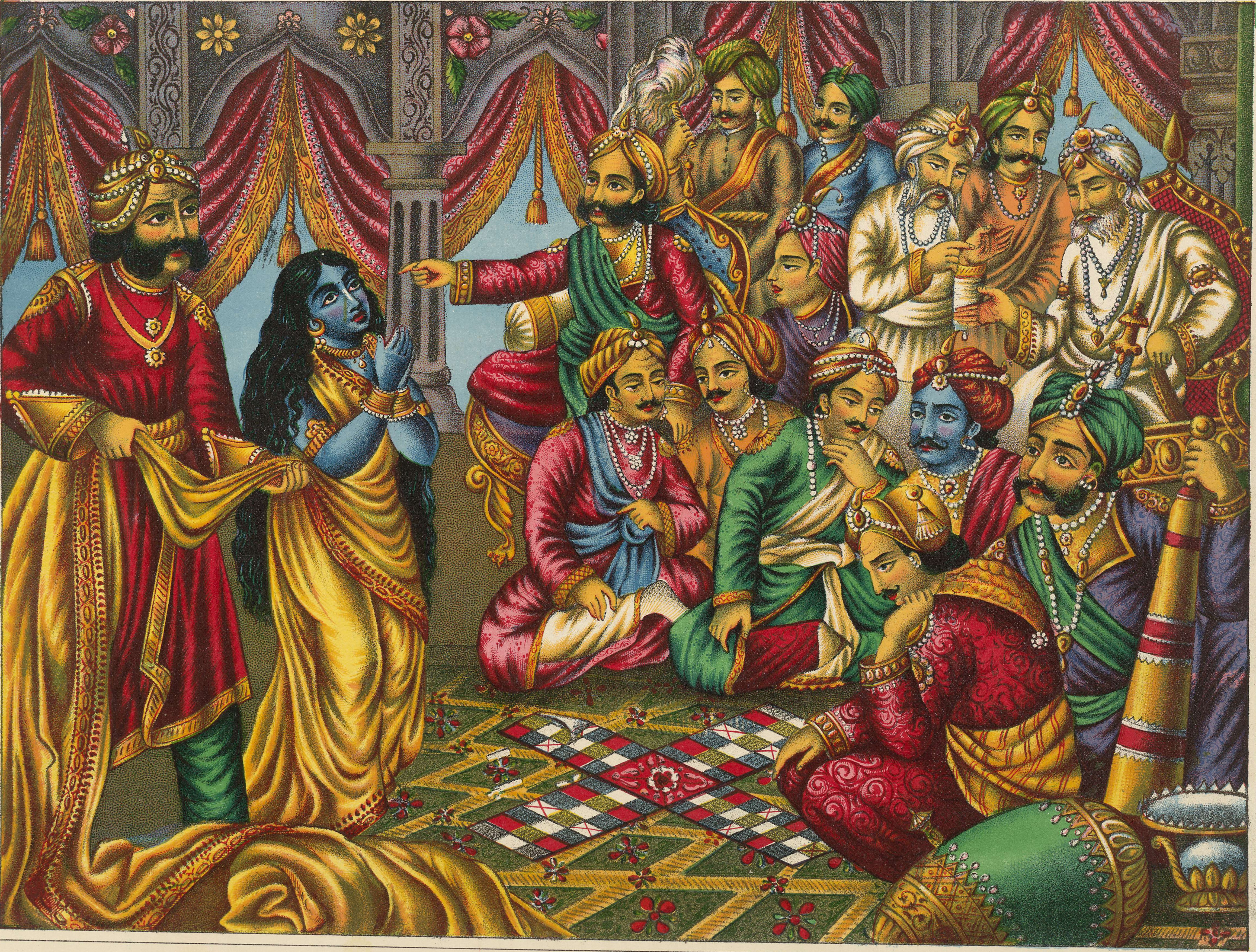
(Draupadi s presented to a pachisi game, link)


