And so it had been prophesied that
the great king Kamsa would be laid low by the eighth child of his
sister. Fearful of this prophecy, the great king had his sister and her husband
imprisoned and each time she would bear a child, he would come into the room,
take it from her and her husband, and kill it by smashing it against the cell wall. This continued many
times over many years with his sister mourning in agony each time her child
was taken from her.
Finally,
the time came when her eighth child was to be born. It was late at night and Kamsa was sleeping in his bed while the child came into the world. When the child was born, his
mother and father looked him over and were forlorn for he was deformed and
frail. His skin was fragile and tore easily, one of his legs was longer than
the other, and his eyes were filled with thick clouds. They mourned for
their poor child and his frailness. His mother named him Krishna.
In the
morning, Kamsa was informed by his men that the eighth child (the one that he had been warned of) had been born and
so he went into the cell to finally kill this child and thus give himself
immortality, but what he found did not frighten him. Instead, he was humored by
what he found. “This child will never harm me. This child could never harm
anyone except by accident perhaps. It will be lucky to survive a month on its own, It is sickly to look at. It poses no threat to me or anyone” he said and left laughing, feeling that the prophecy must have been wrong. There was no way such
a weak and deformed child was going to pose any threat to him.
After
several days passed, Kamsa decided to free his sister and her husband, letting
them return to their homes. “You pose no threat to me anymore” he said, sending
them away from his palace with nothing but the clothes they wore. They wandered
for most of the day, crossing a great bridge to reach a small village on the
other side. There, they stopped and rested for the night.
That very
night, though, Kamsa had a nightmare that a great horror had befallen him and
ended his life. He woke up terrified and called his soldiers, sending them
forth into the nearby villages to slaughter the children that lived there. The child had to die. He had made a mistake. And
so his soldiers went forth, killing hundreds of babies, but they did not go far
enough to reach the village where the baby Krishna was hidden. It was too late and he had slipped through the king's mighty grasp.
Kamsa felt tentatively safe, assuming the child had been found and killed, but he was never certain and for many
months, he slept nervously, afraid of what he didn’t know. He had always known
to trust the prophecies and he cursed himself for not simply killing the child
when he had had the chance to do so. Now, there was no way to be certain if the child was still alive. He
ordered his soldiers to search for his sister and her husband, but no matter
how hard they looked, they could not find the couple or the child. Kamsa was
left in a state of constant worry, unsure of what to do in order to try to save
his life. He summoned mercenaries and demons alike and offered them great wealth if they could find his sister and her husband and slay the child that was with them. They all accepted and spread out across the countryside to hunt down the child.
Authors note: So I tried something new with this. I decided
to write a story that’s going to be a part of a series. I will continue this story
for the next few weeks. The idea here is that Krishna will grow up through the
stories and survive constant deadly trials purely out of luck. He will be a bit
of a bumbling and sickly idiot who is somehow saved through pure luck. The story isn't really laced with humor which I had originally intended. In fact, it's kind of dark and it's an interesting take on the constant role of divinity in these tales. I decided to turn it all on its head and have an important character who is only saved through constant luck. Krishna in this tale isn't powerful or imposing to look at. In this story, he's frail and sickly and it's a wonder he hasn't died of natural causes on his own yet let alone died from the people and things intentionally out to get him. This kind of fits in with the other absurd pieces I've put in my portfolio and I've been adding another chapter to this story every week since I wrote this piece so stay tuned and check out the future pieces.
Bibliography: Epified Krishna, link
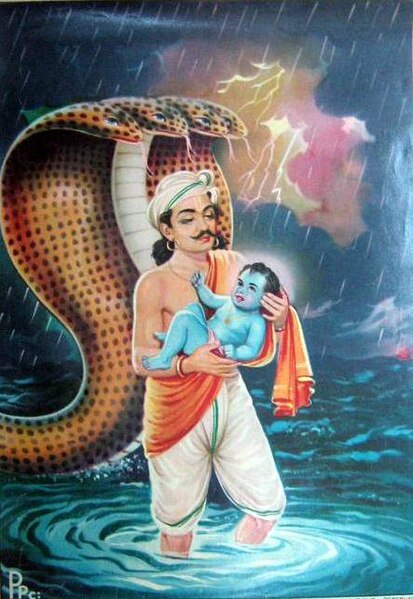
(Krishna's great escape, wikimedia commons)