Wednesday, November 30, 2016

Story: The Bumbling God Finale

And so Krishna had aged and the demons had all but given up hope of ending the man's life. There was no hope of bringing him down for luck was always on his side. No matter what had been sent at him the boy has survived untouched for his entire life. Despite being frail to behold, weak, and sickly, he had made it into adulthood through all the trials and tribulations of his life.

Kamsa had grown extremely frustrated over the years for no matter what he tried, his attempts to end Krishna's life had failed. It seemed there was no hope. Still, Kamsa hoped that either the prophecy had been wrong or that he would find a way to end Krishna's life and prevent the prophecy from occurring. All the the times Krishna had survived against all odds led Kamsa to believe the prophecy was true though and the boy was only being kept alive so that he could fufill the prophecy. Kamsa had one final plan. He sent his soldiers far and wide to find someone that looked exactly as he did. The goal was to have Krishna kill the lookalike and thus the prophecy could perhaps be fulfilled.

An older man who looked like Kamsa was found and brought to the palace and dressed in royal Garb and Kamsa himself dressed as a lowly servant and served his lookalike, but secretly he still gave orders through whispers to his soldiers and servants. Kamsa had his lookalike issue a great proclamation throughout the land that summoned the man known as Krishna to the palace and great wealth was promised to whomsoever was able to get Krishna to the palace. It was Kamsa's belief that simply escorting the man wouldn't let unnatural luck save the man.

Krishna heard of this proclamation and decided to go himself to claim the great wealth for his family but his mother and father begged him not to go. "It will be your death," they said.
"Fear not, mother and father," Krishan said. "I will be fine. The gods watch out for me." And they let him leave though they mourned in their hearts for their son.

Krishna came to the great palace and he was escorted into the throne room where Kamsa's lookalike was sitting on the throne.
"Krishna, welcome to my palace. I have heard of your abilities and would like to personally challenge you to a duel. If you shall win, you may take my place on the throne." Krishan knew he could not deny the duel or he would simply be killed on the spot and thus he agreed. The date and time was set. The duel was to occur the following morning shortly after sunrise.

Krishna was escorted to a grand room and he was brought expensive foods and drinks but he did not take them. Kamsa had had it all poisoned but again Krishna was saved by luck. He was simply not hungry or thirsty that night.

The next morning came and Krishna was escorted from his room and into a grand arena where Kamsa's lookalike was already waiting in the center in golden armor, carrying a massive sword. Krishna wore only a simple tunic and belt.

"Choose your weapon!" Kamsa shouted and suddenly many slaves ran at Krishna all holding various weapons. They stopped a few feet from him and held them out to him for the man to pick. Krishna was not strong and his deformity meant he couldn't use a bow or arrow well and so he took a simple wooden spear. He did not expect to win this fight but he was prepared to die. He had lived a good life and survived against great odds to get so far. It was time. The slaves retreated back to their hidden corners and the two men stood in the arena. Suddenly, a great horn sounded and the battle began. Kamsa charged forward towards Krishna but Krishna did not flee. He lifted the spear up and took aim, prepared to launch it into his enemy. Kamsa grew closer and closer until he was almost on top of Krishna. Krishna let loose the spear and it flew straight but it completely missed Kamsa and soared far past him, impaling a single servant hiding against the outer wall. All the servants and soldiers shouted for it had been the real Kamsa that had been struck. The lookalike stopped just short of cutting Krishna down and he saw where the king lay dead. He dropped his sword and fell to his knees in front Krishna, the new king. And thus, the prophecy was fulfilled.

Authors Note: I wanted to finally end this series before I finished this class and so I put together this ending. I tried to make it seem like Krishna would finally die in this one but then there's the big surprise ending to tie everything up. It probably could have used a bit more information at the ending but I'm satisfied with it for the most part. I hope you enjoyed!

Bibliography: Epified Krishna, link

File:Avatars of Vishnu.jpg
(Avatars of Vishnu, wikimedia commons)

Tuesday, November 29, 2016

Reading Notes: Seven Secrets From the Hindu Calander Art Part D

I'm still enjoying this series quite a bit. It does get a bit dry but since this is probably the last reading assignment I have left in this class, I figured I might as well just get it done with since I already had come so far with the series. This portion focused on two videos: "Shiva's Secret Part 2" and "Devi's Secret". Personally I liked Shiva's secret a bit more. It was just a bit denser on material I felt and overall it was a more enjoyable watch. The visuals are never great though but they're not a huge component thankfully. It could still be better though.

I did like all the material that I learned about Shiva. Shiva is shown to be a destroyer - he beheads his father-in-law but he also has other roles in the Hindu religion and system. It's very interesting to me to be able to read this kind of information when I really wouldn't have been exposed to it otherwise. The main roles focused on here are the transition from destroyer to householder and this unfolds through the familial conflict between Shiva and his wife's family. Shiva doesn't understand the social order around him and thus he is trying to destroy it. Shiva the destroyer is also shown to be very mournful after he loses his wife and he sulks greatly. The other gods try to pressure him into marriage but he is too defeated.

Biblography: Seven Secrets from hindu calendar art, link

File:Lord Shiva Images - An artistic representation of Lord Shiva and the 12 Jyotirlingas associated with him.jpg
(Lord Shiva Images - An artistic representation of Lord Shiva and the 12 Jyotirlingas associated with him, wikimedia commons)

Monday, November 28, 2016

Reading Notes: Seven Secrets from the Hindu Calender part C

So I've been enjoying this series quite a bit and though it's been over a week since I last looked at it, it's still fairly fresh in my mind. I've personally found that going through and reading the transcript below before watching is the best way to glean what's going on. What I mean by this is if you want to try this series, make sure you open up all the links in the transcript below and get a feel for the topic material because the video goes very quickly and you'll get lost if you don't already have a pretty good idea of what they're talking about. So it's really worth reading the notes that are provided below. If you don't you'll certainly regret it.

There's plenty of interesting and new information in these videos as well. I found it very interesting that there is idea that God can be modeled with form and without and that there are even words to describe this. In these cases, the formless one is the more perfect one because any form is inherently limited. It is made clear though that when god is modeled with form there can be certain forms that present the best example for Hindus to see so that they don't just have to believe in this abstract idea. It's very interesting to me because it acknowledges the weaknesses of the human mind and seeks to satisfy those. It

Bibliography: Seven Secrets from the Hindu Calendar, link 

File:Standing Ardhanari c.1800.jpg
(Standing Ardhanari, wikimedia commons)

Sunday, November 27, 2016

Portfolio Introduction

This portfolio is going to focus on my attempts at retellings of the stories we've read in Epics of India.


This first piece is an absurdist rewrite of the original tale of Hanuman's leap. I tried to take the original tale and eliminate some of the more magical elements of the tale and then do an aburdist version that's still loosely based in reality. Enjoy!


This second piece is also pretty absurd, though not quite as much so as the first one. It is the story of the Pandavas hunting the white deer and then their unfortunate trial at the lake but I've rewritten it pretty significantly and replaced the person asking the riddles with something else. Stephen King fans will probably figure it out pretty quickly. Here it is! I hope you enjoy it!


This third piece was kind of experimental but like most of my stories ended up being more comical than I had intended even if it's a bit more serious than my others. I should probably just accept that most of my stories are going to be based in comedy to some extent. This piece deals with the servant's perspective as he tries to save the Pandavas from the soon-to-be burned Laq palace.

This third story is part of a series of stories I've been working on. I was inspired by the Epified Krishna video series and I decided to tell the story of Krishna if he was mainly kept alive through blind luck rather than his divinity. I hope you enjoy it and I'll be adding stories to this one in the future as well. link

This next story in my portfolio is a continuation of the series I started several weeks ago. I've been working on this series several weeks now and I plan on finishing it up pretty quickly since the class is about over. Here again, you see Krishna, despite all his misfortune survive against great odds through blind luck. link

Wednesday, November 16, 2016

Story Planning: The Bumbling God series

So I have decided I actually want to put some more planning into my next piece in the series that I’ve been writing. They’ve gotten very repetitive and personally, I would say that has made them very predictable and quite stale so I wanted to take this week to really plan out what I wanted to do with this series now.

            For those that are new to this piece, the idea of this series is that Krishna is actually a frail, sickly child who only survives due to blind luck rather than godly powers. I’ve based this on the original narrative I found in the Epified version of “Krishna”.

            My original idea was to finally kill Krishna off but that seemed too on the head and a very satisfying ending for this work so thought maybe I should put him in a situation where he actually suffers and doesn’t get magically saved. I’m ultimately leaning to this idea but I’m still not certain how this piece needs to end. The style has been fairly macabre for the most part and I don’t want to mess that up with a suddenly extremely dark or upbeat piece. I’ll probably leave the style untouched this time and focus mainly on changing up what actually happens in this story.


Character development has been pretty weak so far and so I think I want to really flesh out Krishna as a character for once. In most the stories so far stuff happens to him instead of him doing something. I’m going to try to change this up so he is actually the actor. I think having him actually cause something to change in the world will actually make the whole series more enjoyable and give more weight to his character as well. This is the biggest change I want to make. He needs to be more substantive in the work.

Bibliography: epified Krishna, link


File:Bodleian Library Indian paintings MS. Douce Or. a.3 fol30r.jpg
(Bodleian Library Indian paintings, wikimedia commons)

Tuesday, November 15, 2016

Reading Notes: Seven Secrets of Hindu Calendar Art Part B

So I have continued on with the series "Seven Secrets of Hindu Calender Art" and I still enjoy it quite a bit. I think I'm finding that reading the notes in advance before watching the video itself is actually the best way to enjoy this series. Just like "Seven secrets of Vishnu", this series is extremely dense and I mean extremely dense. It's very hard to follow what's going on unless you already understand what is happening. Thus, I really reccomend reading the notes before you actually start watching the videos themselves. There is a massive trove of information within these videos and you'll get new information every few seconds and so using the wikipedia links while you watch is still reccomeded. Being able to have links to these new topics that pop up is really useful.

As for the actual information in the series, it's of very good quality and the explanation format works very well. I found it really interesting that the Greeks did not believe in rebirth. I guess I'd always known the Greeks believed in an afterlife but the separation between an actual rebirth and an afterlife is a very distinct point that I guess was clarified by this video series. The focus on rebirth in Hinduism is almost something entirely unique to it in its form.

Biblography: Seven Secrets of Hindu Calendar art, link

File:Hindu calendar 1871-72.jpg
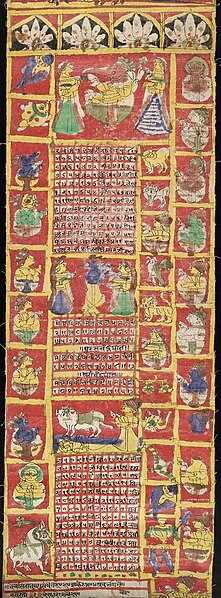
(Calendar art, wikimedia commons)

Monday, November 14, 2016

Reading Notes: Week 13 Seven Secrets from Hindu Calendar Art

So I decided to do another video series and honestly, this one is so much better than the series "The Seven secrets of Vishnu" that I watched for the past few weeks. Like I had no idea how much I was missing and I even tried to use Wikipedia in the last series and I still missed so much. This is so much better with the annotated notes that really show you what's going on and give the actual meaningful information behind the piece. I immensely appreciate all the work put into the notes so thank you Laura for making this stuff much more accessible. I actually am really glad to be able to access this material for once. I had been so discouraged with the last one I went through over three weeks.

Bibliography: Seven Secrets of Hindu Calendar art, link

File:Hindu calendar 1871-72.jpg
(Hindu Calendar, wikimedia commons) 


Wednesday, November 9, 2016

Story: The Bumbling God Part 4

Krishna continued to live as a young man in the forest with the others of his former village. But he was not ever completely safe. Demons were constantly hunting for him but his location was never found for one key reason. Whenever a demon found him, the demon would somehow die before it could relate that information to the others like it. This happened so often that it become a bit of a great threat within the community of demons. They all spoke that if you entered the forest, you would be struck dead. None of them knew why though for everyone who went died.

Finally the demons heard what was happening. They pretended to be regular humans and they listened to the stories of the people that lived in the forest and the people spoke of a man who was immune to the threat of demons. Finally the boy had been found. The demons prepared a great force to send against him in order to finally end him. They assumed he must have been some kind of great warrior unlike any other that had lived before since he defeated so many demons already at such a young age. They armed themselves and prepared in great numbers for their assault. They assumed many of their kind would fall in the attack but they continued with their work.

The day of the attack came. The boy was known to be fishing out on the ocean and he would be an easy target. He wouldn’t have whatever powerful weapons he was using to fight the demons in the past, they assumed. Several of the demons took the form of fish and began swimming looking for the boat with the boy that had to be Krishna. The demons spotted a boat with two people on it - a sickly young man and a brawny, strong figure working with him. The demons did not know that the stronger man was Krishna’s cousin and not Krishna himself. The demons returned to the others like them and informed them that they had found the boy. The demos swarmed across the ocean, taking the form of giant serpents and great sea monsters. They rapidly approached the boat and the two young men on the boat spotted the horrible onslaught and grew horribly fearful for their lives and they ducked down and hid under their nets.

Just as the demons were about to fall on the boat and kill the two young men, suddenly a great storm swept up, sending fierce waves that crushed the demons. The boys assumed the monsters had seized the boat as it swayed viciously in the storm, but after several hours of horrible tossing, the boat stopped and sat in still waters. They had survived and the entire demon army had been killed in the storm. The boy Krishna had lived again. The rumors grew fierce that there was a boy who no one could harm and this word spread far and wide reaching a certain king with a certain grudge against the boy.

Author's note: I have continued the series that I started a few weeks ago and I'm still having fun with it. This is one of the few that I wrote completely from scratch without basing it on a specific story or instance in the epified piece. I had fun with it and though it's gotten a bit predictable, I think I'm going to spice it up in the next few iterations.

Bibliography: Epified Krishna, link

File:Death of Krishna - Illustrations from the Barddhaman edition of Mahabharata.jpg
(Death of Krishna, wikimedia commons)

Tuesday, November 8, 2016

Reading Notes: The Seven Secrets of Vishnu Part F

I have finally come to part F of this video series and I will admit, it was very hard to stay focused on this while constantly checking for election updates throughout it. I'm still nervously glancing out updates and listening to it in the background. But back to the material at hand. I'll repeat that this isn't the best series for several reasons. It's very technical and gives little background info, it moves very quickly with little reason for transitions, and it's visuals could be slightly better. All that said, this isn't the worst series either. You will gain some information from this series. It is an extremely informative series but so much of the information is quite dense and hard to digest, that so much of it will go over the viewers head if they're not pausing to watch. I do recommend keeping Wikipedia open to search anytime something new or someone new is mentioned because otherwise, you'll get confused very quickly. Pause often and look things up if you want to follow along.

These final two videos are pretty good. It's very interesting how they discuss the role of thoughts behind actions and the background information behind that idea is very well done. There is a heavy focus on the weight given to every action that goes beyond just the results of the action. Everything behind it has weight as well. I also enjoyed that this part was on Krishna as I have been doing several stories about Krishna over the past few weeks.

bibliography: Seven secrets of vishnu, link

File:Krishna shows Arjuna his universal form (bazaar art by C. Konddiah Raja, c.1950's.jpg
(Krishna shows Arjuna his universal form, wikimedia commons)

Monday, November 7, 2016

Reading Notes: Week 12: Seven Secrets of Vishnu Part E

So despite being very discouraged by my last two weeks with this material, I've decided to trudge on just to finish it at this point. I didn't want to not finish it considering I've already made it this far. I definitely kind of regret doing it. I was hoping against hope that this piece would be slightly more accessible. I know the Calandar art set has notes so I'll check those out next week. At this point, the series has been very informative, but it is extremely dense.

The content here is very good though. The discussions on the various warring factions involved in Indian folklore is extremely interesting because they focus not on the most obvious elements that I'm used to seeing in literature. The narrator explains how the battles either vertically or horizontally for different groups. It's a very interesting dynamic that I hadn't really considered before and the way it's explained is actually one of the better pieces in this series.

Again, humanity is held as high above all other earthly creatures which makes sense for the time and place. It's a pretty common trope in religion and folklore - humanity is always the most powerful being on the planet excluding the occasional godly visits. It is interesting though that the focus here is how humans are held to a certain standard to try to maintain the more noble qualities of mankind and the earth itself. It's very interesting on how the battle between the more baser natures and higher natures is portrayed as an actual war.

Bibliography: Seven Secrets of Vishnu, link

File:Valmiki Ramayana.jpg
(Valmiki Ramayana, wikimedia commons)

Wednesday, November 2, 2016

Story: The Bumbling God Part 3

The Bumbling God Part 3

As Krishna continued his life in the village, many of the villagers suddenly began to have dreams which urged them to leave the city and as these dreams continued for many nights, the families and people of the village finally packed up and moved. They wandered into a nearby forest where they decided to make their home. In this place, Krishna and his friends would play among the trees making music with flutes and other homemade instruments. They would do this every day, making beautiful and lighthearted music to raise the spirits of the forest. What they did not know was that there was a lake nearby that was home to an evil snake demon and the demon’s very presence made the water poisonous not only to drink but simply to the touch. If you even got any of the water on you, it would kill you within a few short minutes.
            One day Krishna was playing his flute in the woods and he suddenly realized that he didn’t hear the sounds of his friends singing or playing their instruments and so he wandered around looking for them. He found the poison lake surrounded by his dead friends. He fell to his knees and cried for them but suddenly a great snake sprang forth from the lake and rose into the air with the clear intent to eat Krishna. Krishna could not run very fast due to his clubfoot and so he was unable to flee and instead stared directly at the beast. It reared up and then sprang at him with its mouth wide open, prepared to eat the boy. All Krishna could think to do was throw his flute at the creature and he closed his eyes, lobbed the flute, and waited for death. But death did not come for him. He heard a horrible grinding sound and an angry roar and he opened his eyes to the sight of the snake with the flute stuck in its jaws forcing its mouth completely open so that it could not close its mouth. It writhed in agony clearly in pain but confused at what was preventing it from closing its mouth. Krishna hobbled away trying to get to the nearby trees where he could hide. The monster spotted him out of the corner of its eye and it tried to give chase but its vision was hampered by its open mouth and so it struggled to follow the boy. It glimpsed him out of the corner of its eye and lunged again with all its might but instead of hitting the boy, the snake found a tree and drove the flute into its brain, killing itself.

            This great commotion brought other villagers towards the sounds and when they found the boy Krishna next to the dead snake, they could not believe what had happened for clearly a boy with so many physical impairments could not defeat such a demon. The villagers found Krishna’s flute in the creature’s skull though and they came to believe that the boy had killed the snake even though he insisted he had not. He was too humble they said of him. The people would come to think of him as an avatar of one of the gods for no mere mortal would have such luck.

Author's Note: I've decided to continue this series I started two weeks ago. For those new to this piece, basically the idea is that Krishna in this story is still a god but only survives and succeeds through basically random chance. He's deformed and a little bit slow and somehow still always survives through something random happening. In the original source material, Krishna uses his divine powers to simply overcome the beast but here we see he simply lucks out completely but because he is so lucky, people begin to think he is something special. I got the idea for this series of stories mainly because in so many Indian tales that I've read for this class, the characters are all essentially godlike. When they have faults, they're often still fatal but they're still so far above regualr individuals that it made all the stories seem a bit too fantastical. I guess I'm kind of poking fun at it with a bit a flipped take. Now I have a character that is in no way fantastic. In fact, he's a bit slow and still he's able to survive essentially anything thrown at him, not through his won great abilities but because he is very lucky. If you liked this one, check out the others in the series!

bibliography: Epified Krishna, link

File:Avatars of Vishnu.jpg
(Krishna statue, wikimedia commons)

Tuesday, November 1, 2016

Reading Notes: Seven Secrets of Vishnu Part D

Today I continued watching the series, the seven secrets of Vishnu and I still very much enjoy it. It's not the easiest story to follow. It's pretty hard to follow along and I find myself constantly checking things on wikipedia just to be able to understand what's going on, but at some points, I just let it roll and try to follow along. It breaks the flow too much if I'm pausing every ten seconds to go looking something up and then I lose track of what's actually being described. It is still very informative - almost too informative though as it tends to just shower you with new information. For example we start off hearing about the goddesses of wealth and learning and I as the viewer am following along generally at this point, the stage has been set, we have these two characters and so now let's see where we go with this. We get some good information about how they look and the images give us some basic information and we even get some personality information about them but as soon as the descriptive elements pass, we get into another word salad of information where new characters show up and actions are happening and it's not really clear where we are in space. I still feel like there's a ton of material there but I'm struggling so much to absorb it right now.

Bibliography:  Seven secrets of Vishnu, link

File:Indian - Dwarf Form of Vishnu - Walters 25260.jpg
(Vamana statue, wikimedia commons)

Monday, October 31, 2016

Reading Notes Week 11: Seven Secrets of Vishnu Part C

So I have decided to continue on with the series The Seven Secrets of Vishnu. Today I watched the videos for part C and was still really intrigued by the material. I found it all very interesting though I still have one major concern with the format. They name-drop in these videos so freaking much that I can never really follow along without having to pause every few seconds and these aren't simple names either - often it's very major new characters being introduced and they're just breezed over as if the viewer is already supposed to know what's going on. It's almost like this is made mostly for people who already know what's being talked about or are at least familiar with the material. I recognize some of the names of people, places, and things that are mentioned but so many of them just breeze by that I'm left feeling out of the loop if I don't pause very often.
Outside of that main concern, I still like this series. You do have to pause often on your own to make sure you understand what's going on and Wikipedia is very important with that but it's doable. It's nice that this material exist even if it isn't done in the most ideal format for an outsider like me. It's still an enjoyable and educational watch.

Bibliography: Seven secrets of Vishnu, link

File:Kurma deva.jpg

Wednesday, October 26, 2016

Story: The Bumbling God Part 2

The Bumbling God Part 2

The baby Krishna came to grow up in a village not to far from the palace in which he was born. Kamsa had given up hope of finding the child with his own men but he was still anxious for and worried for the prophecy could still come to end his life and thus he had sent demons to find the boy and kill him. As Krishna grew up he became known as something of a trickster among the villagers. This was not entirely his fault though as he often accidentally inconvenienced others. 
Krishna was considered a massive troublemaker but few knew that it was not his intention to ever inconvenience others. It was his curse. Because one of his legs was longer than the other, he had an odd gait that led him to often walk in odd patterns instead of in a straight line. When his mind would drift while he walked, he would often bump into women who were carrying jars filled with milk or butter and thus Krishna was known as the one who spills milk and butter among the people of the village even though he had never tried to spill their milk or butter. The women whose milk had been spilled would go to Krishna’s mother and explain what the boy had done but his mother would always defend him.
“It is not his fault,” she would say. “The boy’s mind simply wanders and he doesn’t see you sometimes.” The other women would begrudgingly accept this and go on their way. Now the young Krishna was still being hunted but he did not know what to fear. The boy was still young and very naïve and while he was walking through the village one day, a woman bumped into him and she spilled the milk she was carrying all over the ground. Krishna apologized and offered to make reparations but the woman said she was fine. She simply asked for Krishna to help her carry the pieces of her jar home so it could be mended with clay. The boy helped her back to her home but once she was there, she thanked him for the help and offered him a cup of water. Krishna did not want to be rude and so he stepped towards the woman to take the cup, but he tripped over his foot and caused the woman to spill the water on herself. She screamed in agony and writhed on the floor as the water burned her flesh. Krishna did not know what was happening and so he fled from the house back to his home. He didn’t know that the woman was a demon who had been planning on poisoning the young Krishna, but when the poison was spilled on her instead, it had poisoned her and ended her life.

Kamsa learned quickly from other demons that the first assassin he had sent had failed to kill the boy and thus he was determined to send others to make sure the job was finished this next time.

Bibliography: Epified Krishna, link

File:Krishna's great escape Bazaar art,1940's.jpg
(Krishna's great escape, wikimedia commons)

Tuesday, October 25, 2016

Reading Notes Week 10: Pattanaik's Secret Secrets of Vishnu: Part B (Matsya)

So I've continued to watch this series on the seven secrets of Vishnu and I have to say it's been pretty enjoyable so far. It's well done, has good production value for what it is, and is extremely informational. I have to echo again just how nice it is to actually get the little details of the history pieces after watching the short Epifed pieces I watched in the past. This is really a breath of fresh air because it actually gives you everything you could ever want to know and more. I love it. I've always been really into history and wanting to know more about something when I heard something. Wikipedia has always been a great resource for that kind of background information but often I find myself digging deeper and deeper into wikipedia and I end up with the philosophy problem - you know the idea that if you spend enough time clicking random links in wikipedia, you'll end up on the page for philosophy. But back to the main material. This day's material covered the secret: "Only humans can empathize and exploit". The material feels very religious in nature - it's that kind of "man is superior to all other beings" kind of thing but is interesting how it is manifested in these pieces for today. The basic idea is that humans are the most superior creature because they have a larger brain and it's postulated that this is modeled in Hinduism with a mark of vishnu on the forehead. The idea is that it's to show that the human brain is something unique in nature. Overall, it was a very enjoyable watch and I think I learned quite a bit from it.

Bibliography: Pattanaik's Secret Secrets of Vishnu: Part B (Matsya) link

File:Matsya avatar.jpg
(Matsya image, wikimedia commons)

Monday, October 24, 2016

Reading Notes: Pattanaik's Secret Secrets of Vishnu: Part A Week 10

So I decided to with another video option because I find them very easy to gain information from with tight time constraints and also because they've generally been a very fun and exciting way to learn the new material. I actually expected this one to be a lot like the epified Mahabharata or the epified Krishna, but I was pleasantly surprised when it was something much deeper in information. It wasn’t just surface information like the epified videos generally were. This video series really digs into the meet of the topic and discusses why each little detail is important. I like how the difference between material reality and spiritual reality is made explicitly clear and the creators go very in depth in explaining the common tropes and metaphors used to represent each. It’s nice to get some background information with the material for once. It’s kind of like the public domain versions of the Ramayana and the Mahabharata. If you remember, those had tons of links that took you to Wikipedia pages that explained all sorts of things that a casual western reader may not understand whether it be a cultural thing or a specific deity or character that is known in Indian mythology but not in western myths. It was a very fun watch and I actually learned quite a bit from these two videos. I’m excited to watch the next ones.

Bibliography: Pattanaik's Secret Secrets of Vishnu, link


File:Mohini Halebid.jpg
(Mohini Statue, wikimedia commons)

Wednesday, October 19, 2016

Storytelling: The Bumbling God

The Bumbling God


And so it had been prophesied that the great king Kamsa would be laid low by the eighth child of his sister. Fearful of this prophecy, the great king had his sister and her husband imprisoned and each time she would bear a child, he would come into the room, take it from her and her husband, and kill it by smashing it against the cell wall. This continued many times over many years with his sister mourning in agony each time her child was taken from her.
            Finally, the time came when her eighth child was to be born. It was late at night and Kamsa was sleeping in his bed while the child came into the world. When the child was born, his mother and father looked him over and were forlorn for he was deformed and frail. His skin was fragile and tore easily, one of his legs was longer than the other, and his eyes were filled with thick clouds. They mourned for their poor child and his frailness. His mother named him Krishna.
            In the morning, Kamsa was informed by his men that the eighth child (the one that he had been warned of) had been born and so he went into the cell to finally kill this child and thus give himself immortality, but what he found did not frighten him. Instead, he was humored by what he found. “This child will never harm me. This child could never harm anyone except by accident perhaps. It will be lucky to survive a month on its own, It is sickly to look at. It poses no threat to me or anyone” he said and left laughing, feeling that the prophecy must have been wrong. There was no way such a weak and deformed child was going to pose any threat to him.
            After several days passed, Kamsa decided to free his sister and her husband, letting them return to their homes. “You pose no threat to me anymore” he said, sending them away from his palace with nothing but the clothes they wore. They wandered for most of the day, crossing a great bridge to reach a small village on the other side. There, they stopped and rested for the night.
            That very night, though, Kamsa had a nightmare that a great horror had befallen him and ended his life. He woke up terrified and called his soldiers, sending them forth into the nearby villages to slaughter the children that lived there. The child had to die. He had made a mistake. And so his soldiers went forth, killing hundreds of babies, but they did not go far enough to reach the village where the baby Krishna was hidden. It was too late and he had slipped through the king's mighty grasp.
            Kamsa felt tentatively safe, assuming the child had been found and killed, but he was never certain and for many months, he slept nervously, afraid of what he didn’t know. He had always known to trust the prophecies and he cursed himself for not simply killing the child when he had had the chance to do so. Now, there was no way to be certain if the child was still alive. He ordered his soldiers to search for his sister and her husband, but no matter how hard they looked, they could not find the couple or the child. Kamsa was left in a state of constant worry, unsure of what to do in order to try to save his life. He summoned mercenaries and demons alike and offered them great wealth if they could find his sister and her husband and slay the child that was with them. They all accepted and spread out across the countryside to hunt down the child.


Authors note: So I tried something new with this. I decided to write a story that’s going to be a part of a series. I will continue this story for the next few weeks. The idea here is that Krishna will grow up through the stories and survive constant deadly trials purely out of luck. He will be a bit of a bumbling and sickly idiot who is somehow saved through pure luck. The story isn't really laced with humor which I had originally intended. In fact, it's kind of dark and it's an interesting take on the constant role of divinity in these tales. I decided to turn it all on its head and have an important character who is only saved through constant luck. Krishna in this tale isn't powerful or imposing to look at. In this story, he's frail and sickly and it's a wonder he hasn't died of natural causes on his own yet let alone died from the people and things intentionally out to get him. This kind of fits in with the other absurd pieces I've put in my portfolio and I've been adding another chapter to this story every week since I wrote this piece so stay tuned and check out the future pieces.


Bibliography: Epified Krishna, link

File:Krishna's great escape Bazaar art,1940's.jpg
(Krishna's great escape, wikimedia commons)

Tuesday, October 18, 2016

Reading Notes Week 9: Epified Krishna Part B

So I’ve continued on with the story of Krishna as done by Epified. It’s a really interesting series and not one that I probably would have found without this class to lead me to it. I first tried the Epified series with the Epified version of the Mahabharata and though at first, I said that the material doesn’t really go into enough depth, I think I’ve come to a more complete conclusion on that. So even though these are very short and don’t give a ton of detail, you can’t really judge them on that scale because they’re not setting out to do that in the first place. They set out to give a cursory overview of the material they’re working with and they do that very well. In some ways, I find the story of Krishna far more interesting just because it’s not as varied and it doesn’t bounce around as much. Personally I felt that the Mahabharta in both the written form and in the Epified version really just bounces around far too much and it makes it very hard to really follow the narrative arcs because there’s constantly new characters and new people being talked about. Now with this story, the narrative is much more focused and targeted around one person and I think this works much better for the Epified format. Instead of telling a bunch of one to three minute stories that only have small connections between them at times, all these stories are very strongly connected. It also feels like the stakes feel higher. From the very beginning of the piece, things have been extremely intense and tumultuous. It really holds the viewer in very well. Finally, I appreciate that the narrators actually have Indian accents because it adds a certain strong cultural tone it that really works well for the piece.

Bibliography: Epified Krishna, link

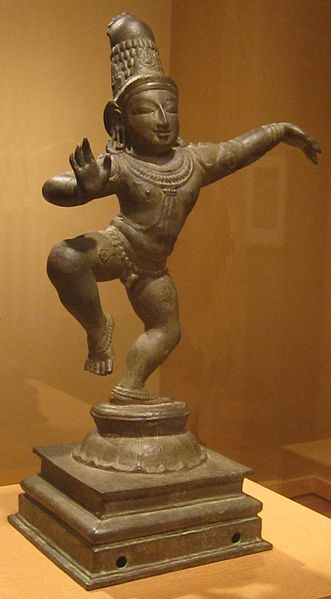
File:Dancing Krishna, India, Tanjore, Tamil Nadu, Chola dynasty, 14th century, bronze, HAA.JPG
(Krishna Statue, wikimedia commons)

Monday, October 17, 2016

Reading notes Week 9: Epified Krishna Part A

I chose to go with the Epified version of Krishna. I made this decision because I really enjoyed the Epified version of the Mahabharta and though I still feel that they don’t give you a ton of information to work with, they do a pretty good job of giving you a basic overview of the material you’re working with. It’s not ideal but it works for the format they’ve chosen. I really do appreciate this kind of format and it makes we wish I had some more artistic skills so that I could pull something off like this. The white board animation is really interesting and it’s even more interesting when you consider that they’re making sure the timeline of the narrations fits the drawn components and I wonder if they speed up or slow down certain drawings in order to fit the narration constraints rather than vice-versa. It certainly seems like that would be the easier of the two options. I guess the other option would just be creating the narration after you’ve done the drawing – so for example, you know it takes three minutes to play the video of the drawing and so you just constrain the narration you write into that three minute block. Either way, it’s an extremely effective and interesting way of presenting material. Even though it’s not the most in-depth, it’s a great way to give outsiders a brief glimpse into the material without being too intensive. I do sometimes struggle to hear all the names they say and this is one area where the written version of the stories really win out. It’s hard to tell who is being described at times unless you’re familiar with many of the names already. Due to my cultural difference, it’s taken a bit longer to catch onto the various names and places.


Bibliography: Epified Krishna, link


File:Sri Mariamman Temple Singapore 2 amk.jpg
(Krishna statue, wikimedia commons)

Tuesday, October 11, 2016

Week 8 Growth Mindset

Though I haven't been directly trying to maintain the growth mindset as it's been set forth, I think I've done a good job of sticking to the basic ideas of it. I've tried to always do my best this semester and though it's been tough to be motivated as this is my senior year and I'm spending a lot of time working of job apps that I wish I could use to study. I still think I've been doing a pretty good job of trying to go above and beyond with my material when I have the time to do so. I hope that with the rest of the semester I can try maybe a little bit harder and improve my performance in my classes. I'm of the mindset that if I do my best and it's still not good enough, I can accept that I did everything I could to do well with something. It's not ideal but with time constraints, this semester has forced me to be very rigorous in how I schedule and do my work.

Image result for growth mindset
(Growth Mindset brain, Pixabay)